

Annapurna Base Camp Location:
Geographic Coordinates:
- Latitude: 28.5306° N
- Longitude: 83.8780° E
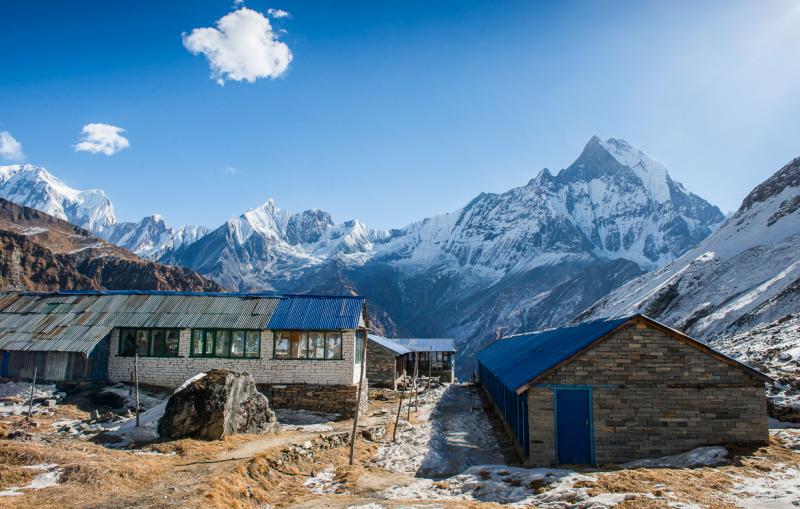
Annapurna Base Camp (ABC) is located in the central region of Nepal within the Annapurna Conservation Area. It lies at an altitude of 4,130 meters (13,549 feet) and is situated in a natural amphitheater known as the Annapurna Sanctuary.
The Annapurna Conservation Area Project (ACAP), located in the Kaski District of central Nepal, is renowned for its diverse ecosystems, cultural richness, and stunning mountain scenery, including views of the Annapurna and Dhaulagiri ranges.
The main access points for the ABC trek are Nayapul and Dhampus Phedi. The journey typically takes 9 to 12 days and covers approximately 45 to 50 kilometers from Nayapul to ABC. These distances are approximate and can vary depending on the specific trails taken and any detours or side trips. The trekking itinerary is designed to ensure a gradual ascent to help with acclimatization and to allow trekkers to enjoy the scenic beauty along the way.
Information of Annapurna Conservation Area Project
Annapurna Conservation Area project (ACAP) is largest conservation area of Nepal and located in north center in Nepal. It has 7629 square Km and established in 2049 B.S. (1992 A.D.). It is bounded by the mustang in the north, Kali Gandaki River in the west, Marsyandi valley in the east and Pokhara valley is the south border.
This project was initiated by National Trust for Nature Conservation (the king Mahendra Trust for Nature Conservation) a non- government organization and donate by many international trusts. Nowadays, this project conserved by National Trust for Nature Conservation (NTNC) and local people community from local area. The head quarter of this ACAP is Ghandruk.
Annapurna Base Camp Trek Difficulty
Annapurna Base Camp (ABC) Trek is considered to have a moderate difficulty level, requiring 5 to 8 hours of walking per day. The trail is well-maintained, with a mix of uphill and downhill terrain at progressively increasing altitudes.
This trek typically takes 9 to 12 days. Moderate fitness is required, but good health, physical fitness, and mental preparedness to ascend to 4,120 meters are highly recommended. Some experience in multi-day hiking or trekking is beneficial.
Starting at Hile or Thikhe Dhunga, where you'll spend your first night at an altitude of 1,500 meters, the trek ascends to 4,120 meters at Annapurna Base Camp. From Deurali to ABC, the trail poses more difficulty due to significant altitude gain and rugged terrain, but it is generally not extreme. Proper acclimatization days, such as staying at Machapuchare Base Camp, help trekkers adjust to the elevation and minimize the risk of altitude sickness.
The trek to the base camp of the tenth-highest mountain in the world is definitely not simple. Some sections of the trail are relatively challenging, with steep slopes and rocky terrain within lush bamboo and rhododendron forests. Some parts of the trail can be prone to landslides and avalanches. Snowfall and rainfall can make the trek more challenging, so it is important to prepare with proper seasonal equipment.
Having a guide and porter is highly recommended for successfully completing the ABC Trek without difficulties. A guide will provide valuable information and assistance, while a porter will carry your luggage, making your trip to ABC more enjoyable and hassle-free.
Best time for Annapurna Base Camp Trek
The best time for the Annapurna Base Camp (ABC) Trek falls into two primary trekking seasons: spring (March to May) and autumn (September to November). Even though the beginning of September to the end of May are very good times for the Annapurna Base Camp, proper preparation is needed during the months of December, January, and February. By choosing the best trekking season, you'll maximize your chances of enjoying clear views, pleasant weather, and a memorable trekking experience to Annapurna Base Camp.
Spring (March to May)
- Weather: The weather is generally stable and warm during the day, with longer days and stable temperatures, making for comfortable trekking conditions. Nights can still be cold at higher elevations, but not as harsh as in winter.
- Scenery: This season is known for its vibrant rhododendron blooms and lush greenery. The clear skies offer stunning views of the Annapurna and Dhaulagiri ranges.
Autumn (September to November)
- Weather: Post-monsoon, the weather is stable with clear skies and excellent visibility. Daytime temperatures are moderate, and nights are colder but manageable with proper gear.
- Scenery: The landscapes are lush and green after the monsoon rains, and the clear skies provide some of the best views of the surrounding mountains.
- Festivals: This period coincides with major Nepali festivals like Dashain and Tihar, offering a unique cultural experience.
Winter (December to February):
- While possible, winter trekking to ABC can be challenging due to cold temperatures and the risk of snow blocking the trails. Only experienced trekkers with an experienced guide should consider this season for the Annapurna Base Camp Trek.
Monsoon (June to August):
- The monsoon season brings heavy rains, leeches, and slippery trails, making it the least favorable time for the trek. However, some trekkers have still trekked there, being prepared for rain and humidity.
Required Permits and Cost for ABC Trek
For the Annapurna Base Camp (ABC) Trek, you need two primary permits: the Annapurna Conservation Area Permit (ACAP) and the Trekker's Information Management System (TIMS) Card. The Annapurna Base Camp Trek is situated in the Annapurna Conservation Area, so it is necessary to buy the ACAP permits for entrance. The TIMS card is for tracking trekkers, ensuring their safety and security during trekking activities.
Both of these permits are compulsory for the Annapurna Base Camp Trek. These permits are obtained through registered trekking agencies from the Nepal Tourism Board in Kathmandu or Pokhara. It's recommended to obtain these permits in advance to avoid any hassles during your trek.
You must carry these permits with you throughout the entire trek and present them at every checkpoint along the Annapurna Base Camp Trek. If you are found trekking without these permits, you will have to purchase them on the spot at double the cost (penalty), or you may be required to turn back.
TIMS (Trekkers Information Management System) Card
- It Cost US$ 20 per person/ per Trek
Annapurna Conservation Area Project (ACAP) permits
- It cost US$ 30 only per person/ per trek
Accommodation in Annapurna Base Camp Trek
There are many accommodations and restaurants along the trekking trail to Annapurna Base Camp up to Chomrong, as new houses and rooms are added for trekkers every year. So, you can easily find comfortable accommodation until Chomrong. However, above Chomrong, there are limited teahouses, and each teahouse has limited accommodations controlled by the Annapurna Conservation Area Project. During the peak season, it can be difficult to find a private room, so you may have to share with other trekkers. Almost all teahouses strive to provide the best service for all travelers.
Normally, lodges have one or two private rooms (2 beds per room) with shared indoor bathrooms. Other rooms often have five to six beds, similar to a dormitory. There are no luxury lodges like those found on the Annapurna Circuit or Everest Base Camp treks. Teahouses also offer hot showers for an additional fee. Charging electronic devices is usually available for a fee as well, but it's recommended to carry a power bank.
Food in Annapurna Base Camp Trek
Food during the Annapurna Base Camp (ABC) Trek is primarily provided by the teahouses along the trail. Every teahouse has a food menu, and the food items are almost the same at every teahouse in each location. You can choose food from the menu based on your requirements. Most of the teahouses grow fresh vegetables in their gardens and serve them to customers, especially at lower altitudes.
The cooks are generally trained, but the taste of the food might be a bit different from Western cuisine. Fresh meat is totally prohibited in the Annapurna Base Camp area, so it is advisable to be vegetarian during the ABC trekking routes.
Breakfast:
- Porridge: Oatmeal or other grain-based porridge.
- Bread: Tibetan bread, chapati, or toast with jam, honey, or peanut butter.
- Eggs: Boiled, scrambled, fried, or in an omelet.
- Pancakes: Often served with honey, Jam or chocolate spread.
- Tea/Coffee: Local tea, black tea, green tea, or instant coffee.
Lunch and Dinner:
- Dal Bhat: A traditional Nepali meal consisting of rice, lentil soup (dal), vegetable curry, and sometimes meat. It is highly recommended due to its balanced nutrition and energy content.
- Noodles: Fried noodles, noodle soup, or Thukpa (Tibetan noodle soup).
- Rice Dishes: Fried rice or rice with curry.
- Momos: Nepali dumplings filled with vegetables or meat, served steamed or fried.
- Pizza: Basic pizza, often with a thick crust and limited toppings.
- Pasta: Simple pasta dishes like spaghetti or macaroni with sauce.
- Soups: Various soups, including garlic soup (recommended for altitude sickness prevention), vegetable soup, and tomato soup.
Recommendations
- Dal Bhat Power: As the saying goes, "Dal Bhat Power, 24 Hour!" It's a nutritious and filling option that provides sustained energy for trekking.
- Hydration: Stay well-hydrated by drinking plenty of water, tea, and soup.
- Energy Boosters: Carry high-energy snacks like nuts, chocolate, and dried fruits to maintain energy levels during the trek.
Drinking water in Annapurna Base Camp Trek
Safe drinking water is an important factor during the Annapurna Base Camp (ABC) Trek. Staying hydrated is essential for successfully completing the trip, especially at high altitudes. Bottled water is available in teahouses and shops along the trek up to Chomrong, but prices increase as you ascend, typically ranging from NPR 100 to NPR 300 per liter.
Above Chomrong, bottled water is completely prohibited due to the high environmental impact of plastic waste in the mountains. However, teahouses provide boiled water for an extra fee, typically ranging from NPR 200 to NPR 400 per liter. Therefore, bringing a water bottle is highly recommended for all trekkers.
There are natural water sources available, such as streams, rivers, and tap water in many places along the trek, but this water should always be purified before drinking. For water purification, you can use water purification tablets, water filters, or UV purification. You can also ask your guide for information about safe drinking water during the Annapurna Base Camp Trek.
Communication in the Annapurna Region
Annapurna region is popular trekking destination In Nepal. There are good mobile network services and internet services in the whole Annapurna region trekking area but not few places such as Nar Phu Valley, Tilicho Lake and Saribung Pass trekking. The internet service will be available whole Region but tea-houses and lodges provide internet with some extra charge. If you have not Nepali SIM card for communication with your family and not use the internet service, our guide help to you for pass the massage because always our guide have cellular phone and he contact to Kathmandu trekking office about to know the trek and your health condition as well as we help any kinds of problem during the trek.
Hence, travelling is important things in life so we make sure you about safe and healthy during the trekking in Nepal. Nowadays, you can get the local SIM card in Kathmandu airport after arrival to use the 3g and 4g internet service because most of the trekking routes in Nepal have Mobile Network service. If you need Nepali SIM, we can provide to you for your trekking but you have to tell us before leave the trekking.
Acclimatization:
High altitude sickness is common problem in the high Himalayan area when you go as higher elevation. It is appears very quickly but symptoms are preventable. If you have previous high altitude trekking experience, it might be best but if not trek in above three thousand meters high you need to prevention of the high altitude sickness. You need a extra suitable acclimatization days to complete the trip and Walk slowly, drink plenty of water, don’t drink alcohol, go higher and sleep low elevation as well as spend 2 nights on every 500 meters above than 3500 meters heights are prevent the altitude sickness during the trekking in Nepal. All our trekking itineraries are flexible with acclimatization days and first priority for your health and safety to complete the trek without any problem. We provide you basic medicine to support for emergency rescue, if situation gets worse.
Hence, every day you have inform to your Guide or Leader about your health condition and he will response to decide whether and your overall health condition to continue the trip or return back.
Tipping information
The Guide, porter, driver and all workers who are working in tourism filed, they except some tips during your Tour Trekking and others activities in Nepal. Tipping is judgment of workers from travelers and workers offers the tips end of the trek. Travelers tips 10% of their payable amount but you can give to them depend on their services.
Hence, it is important to High Pass Adventure working team who take care to you all the time during the visiting in Nepal, motivated with outstanding service and offer inspiring trip in a lifetime experience.
Trip extension
If you have extra time after complete the trek, you can do different activities or different short trek in Nepal. We have many short tour packages and adventure activities such as Chitwan National park and Bardiya National Park for Jungle safari tours. You can visit Pokhara city, Nagarkot Hiking, Dhampus hiking or day Rafting trip in Trisuli River.
Adventure activities are like paragliding, canoeing, Ultra light flight, Bungee Jump and Mountain Biking. These all package are extra activities as optional tours and not included in your package cost. If you will do these activities after the trip with us, we arrange at a reasonable cost and we give to you good discount.
Trekking Gear List
Travel equipment are necessary to pack before you travel. We hope it is too much to carry from your home to others country but some are the necessary equipment can be hired or buy in Kathmandu around Thamel. These general equipment are for all seasons while on trekking in Nepal, but may be different as per the different season and duration of trekking routes on your chosen trip.
Documents:
- Passport and 4 passport size photos
- Travel insurance details (in case an emergency evacuation if needed)
- Boarding passes for flights
- Driver’s license (if needed)
- Cash USD
- Credit/Debit Card (Ensure you have $500 on your card incase an emergency helicopter evacuation is needed)
Sleeping:
- Sleeping bag (Comfort rating -15 Celsius recommended)
- Sleeping bag liner (Optional)
Footwear:
- Trekking boots: one pair lightweight
- Sandals for city and tea house footwear
- Shoes for the plane and tea houses (Optional)
- Gaiters for hiking in winter to the base camp
- Thin, lightweight inner socks
- Thick, warm wool hiking socks
Clothing for Body:
Please make sure that you have non-cotton clothing for trekking:
- Base-layer t-shirts (e.g. running t-shirts)
- Fleece/Windproof jacket
- Waterproof jacket
- Down jacket for warmth
- Travel clothes and City Wear
- Underwear
- Base-layer trousers (optional)
- Waterproof trousers
- Trekking trousers
- Trekking shorts (Optional)
- Gloves and wool hat
- bandanna or scarf
Health Requirements (Basic First Aid Kit)
- First-aid kit; should contain lip salve, Aspirin, Band Aids, anti-histamine, Imodium or similar tablets for mild cases of diarrhea
- Re-hydration powder, extra prescription drugs you may be taking if any particular
- Wet wipes for cleaning can be purchased in Kathmandu
Others:
- Sunglasses and Sun cream
- Towel
- Book (reading and writing materials)
- MP-3 /Music, headphones and ear plug (who know some people on group are snoring) as optional.
- Travel wash
- Hand sanitizer, wet wipes
- A day bag: 35 liters
- A duffel or rucksack with straps to go over your back (Max 12 kg of weight for porters to carry)
- Dry Liner or Dry Bag
- Water bottle/thermos/ camel bag: At least 2 L. Nalgen bottles best.
General Toiletries
- Toilet papers/ tissue
- Contact lenses, Glasses (if needed)
- 1 medium sized quick drying towel
- Tooth brush/paste (preferably biodegradable)
- Multipurpose soaps (preferably biodegradable)
- Large plastic bags – for keeping items dry inside your kit / duffel bag
- Travel game i.e. chess, backgammon, and scrabble. (for luxuries)
- Binoculars (for luxuries)
- Trail Map/Guide book (if you are alone)